EN

Solar energy battery storage system: A Complete Beginner's Guide
A solar energy battery storage system turns daytime solar production into energy you can use later. For a homeowner, it may support selected loads during an outage or shift self-generated electricity into evening hours. For an installer, distributor, or project buyer, it is a coordinated set of batteries, controls, protection equipment, and compatible power electronics—not simply a battery box. This beginner guide starts with the operating goal, because that goal determines every later choice.
From an energy-storage application advisor's perspective, the first useful question is whether the load profile and backup objective are clear. It is tempting to ask for one ideal size; more precisely, a solar energy battery storage system needs to be matched to the appliances, site conditions, solar array, and intended energy-management workflow.
What does a solar energy battery storage system do?
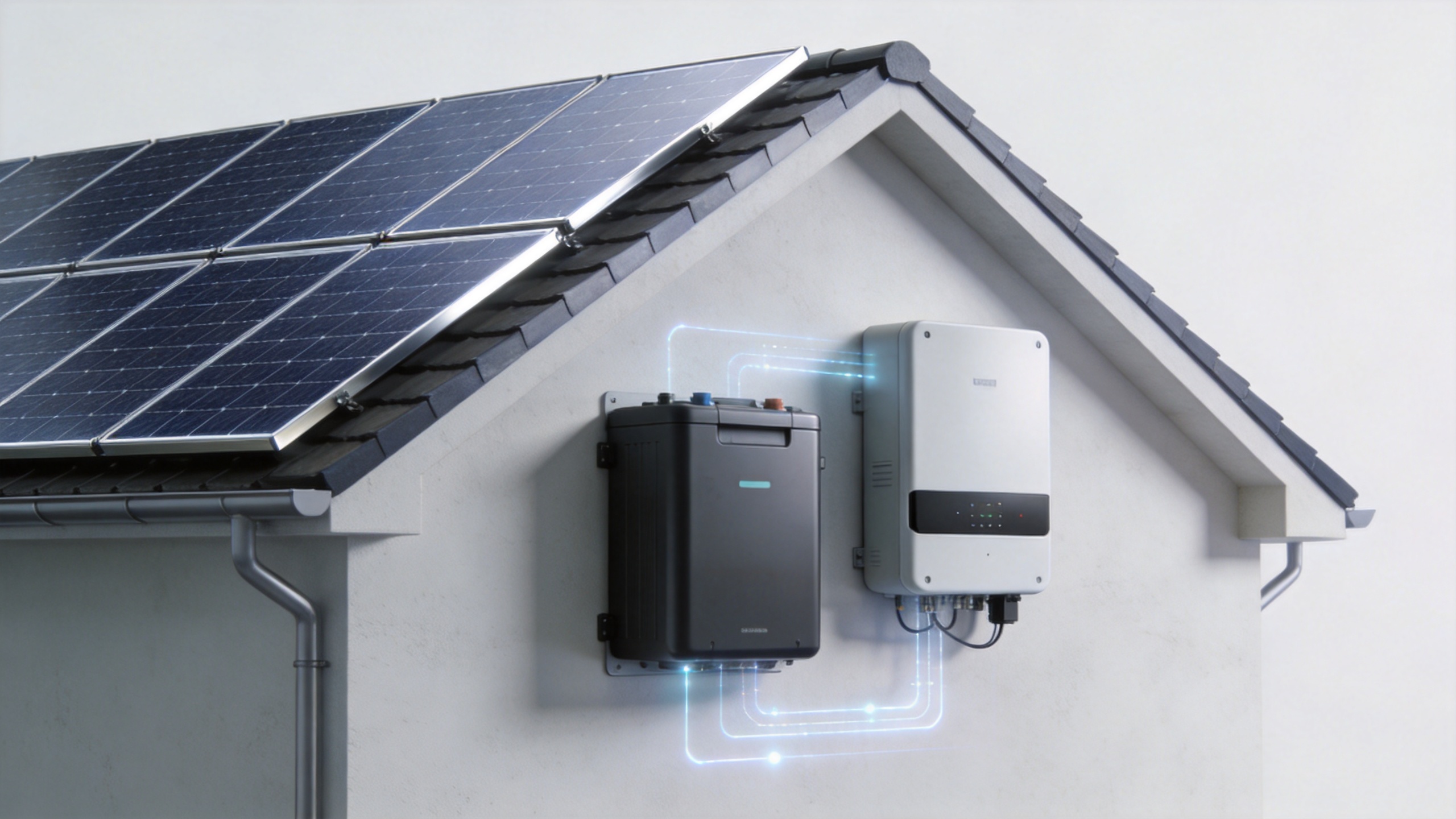
Solar panels make direct-current electricity when sunlight is available. A the storage system can accept surplus energy, store it, and release it later through an inverter or integrated power-conversion equipment. Depending on its design and local settings, the system may prioritize backup reserve, daytime solar self-consumption, time-based energy shifting, or a mix of these functions.
A simple energy path looks like this:
- Panels generate electricity during usable solar conditions.
- Current household or facility loads are served first, according to the configured system logic.
- Available surplus may charge the battery.
- When solar production is lower than demand, the the storage system may discharge within its settings and operating limits.
That sequence is useful, but it is not a promise of continuous backup. Grid rules, inverter configuration, battery reserve settings, weather, load changes, and the installed equipment all affect the outcome.
Start with the job you need the system to do
Before comparing a the storage system, write down the primary objective. Backup planning starts with critical loads such as refrigeration, lighting, communications, pumps, or essential business equipment. Self-consumption planning starts with when the site uses electricity relative to when it produces solar energy. Off-grid planning requires a broader review of seasonal generation, charging sources, and reserve expectations.
One worthwhile shift is to define the goal before looking at capacity. Incomplete energy-use information is a common early planning problem. A short load list should identify each priority device, its running power, possible starting surge, estimated operating hours, and whether it must run at the same time as other devices. This gives a the storage system supplier or installer a usable basis for discussion.
Learn the two numbers beginners often mix up: kW and kWh
A solar energy battery storage system is usually described with both power and energy. Power is measured in kilowatts (kW) and indicates how much electricity the system can deliver at one moment. Energy is measured in kilowatt-hours (kWh) and indicates how much energy is available to use over time. A system can have substantial stored energy yet still be unable to start or run every high-demand device at once if its power capability is too low.
| Question | Specification to examine | Why it matters |
|---|---|---|
| What can run at the same time? | Continuous and surge power (kW) | It relates to simultaneous load demand. |
| How long can selected loads run? | Usable energy (kWh) | It relates to load size and operating hours. |
| Will it work with the current setup? | Inverter, voltage, communication, and protection compatibility | Integration details affect whether a configuration can be assessed. |
For example, the same the storage system energy capacity can support a lower load for more hours or a higher load for fewer hours. Ask for usable energy rather than relying only on a nameplate figure, and ask which loads are included in the proposed backup circuit.
Battery chemistry and LiFePO4 basics
Many buyers researching solar energy battery storage LiFePO4 are comparing lithium iron phosphate chemistry with other battery options. Chemistry is only one selection factor, but it should be discussed alongside the battery-management system, thermal design, enclosure, operating environment, inverter compatibility, and the documented scope of service. A the storage system should be reviewed as an integrated system rather than as an isolated cell specification.
Ask what information is needed before compatibility can be assessed: the existing inverter model, solar-array arrangement, grid connection type, target loads, installation location, and local requirements. This question is especially relevant when adding storage to an established solar installation.
How to size a solar energy battery storage system
There is no universal battery size. Begin with a representative planning calculation, then have the assumptions checked by a qualified professional. For each priority load, multiply its estimated power by expected running time to estimate energy use. Add only the loads that genuinely need to operate during the selected backup period. Then compare the result with usable battery energy, inverter power, charging capability, and expected solar input.
For a the storage system, a practical sizing conversation includes:
- Which loads are essential, optional, or unsuitable for battery backup?
- What is the highest simultaneous demand and any motor-starting surge?
- How many hours of backup are desired under stated assumptions?
- How will the battery recharge during a low-solar period?
- What reserve setting, usable-energy limit, and future expansion path are acceptable?
These questions also improve a wholesale solar energy battery storage inquiry. A distributor or contractor can request equipment scope and technical documentation with a clearer application brief instead of comparing battery capacity alone.
Safety, installation, and system compatibility
Battery storage involves electrical and fire-safety considerations. The installation location, clearances, protection devices, wiring method, ventilation or thermal conditions where applicable, emergency procedures, and local codes should be reviewed for the specific project. Do not assume that a solar energy battery storage system is suitable for every location or existing solar setup without a configuration review.
For retrofit projects, confirm whether the existing inverter can support storage, whether a separate battery inverter is needed, how backup circuits will be arranged, and what commissioning tests are included. For new projects, define the solar, inverter, battery, monitoring, protection, installation, and support scope together. This avoids treating a the storage system as a single-component purchase.
Questions to ask an OEM or manufacturer
An OEM solar energy battery storage discussion should begin with the intended market, application, electrical architecture, target capacity range, enclosure needs, documentation expectations, and after-sales workflow. A solar energy battery storage manufacturer can assess a request more accurately when the buyer shares a load profile, inverter details, installation region, anticipated order scope, and product positioning requirements.
Request a written explanation of rated and usable energy, continuous and peak power, compatible equipment, system protections, monitoring approach, warranty terms, packing and transport requirements, and the responsibilities of each party. A the storage system quote should also distinguish equipment supply from engineering, installation, permitting, and service activities where those items apply.
A beginner's checklist before requesting a proposal
- State whether the goal is backup, self-consumption, off-grid operation, or another defined use.
- List priority loads, operating hours, and simultaneous demand.
- Gather existing solar and inverter information, if any.
- Record the installation location and locally relevant requirements.
- Ask how the proposed the storage system handles power limits, usable energy, recharge assumptions, and expansion.
- For procurement, clarify the desired OEM, wholesale, documentation, and support scope.
Conclusion
A the storage system can be easier to evaluate when you separate the goal, the loads, power capability, usable energy, compatibility, and installation scope. Start with the facts a supplier or installer needs to review rather than a single headline capacity. With those details in place, you can compare a proposed the storage system on a like-for-like basis and ask more productive technical questions.
 Hot News