EN

Modular portable power station: Power on the Go, Simplified
A modular portable power station is easier to discuss when the goal comes before the capacity. A buyer may need quiet backup for a mobile work crew, a power source for field equipment, or a portable unit that can grow with changing demand. Those are different requirements. From a B2B procurement planner’s perspective, the useful comparison is the documented scope of supply, service expectations, and fit for the project—not a headline claim.
That distinction matters because energy storage is a system category, not a battery choice in isolation. The intended loads, their starting behavior, the available charging sources, the duty cycle, and the delivery destination all influence a workable specification. A modular design can simplify expansion planning, but it does not remove the need to define the power task clearly.
What makes a portable power station modular?
A modular portable power station generally separates a base power unit from one or more expansion batteries or functional modules. Instead of choosing a single fixed-capacity enclosure for every customer, the buyer can define a starting configuration and identify how it may be extended later. The term should be verified in each supplier’s documentation: some designs allow battery expansion only, while others add charging or distribution functions as well.
For an OEM modular portable power station program, that difference affects enclosure design, connector selection, labeling, firmware control, packaging, and after-sales parts planning. For a wholesale modular portable power station buyer, it also shapes how many base units, expansion units, and accessories to stock. Asking “how much energy?” is necessary, but it is not enough. The next question is whether the base unit can provide the required output power while the chosen battery configuration provides the needed operating time.
Start with loads, not a capacity number
Before comparing a modular portable power station, list the loads that must operate together. Include rated power draw, any startup surge, approximate hours of use, required outlet types, and whether the load can be paused. A laptop and communications equipment create a different profile from a refrigeration load, a tool charger, or a compact pump. Where the priority loads are clearly defined, the next step is to check how the planned system would support them.
- Energy requirement: estimate watt-hours from the loads and expected runtime, then allow for conversion losses and a sensible operating margin.
- Power requirement: confirm continuous AC output and momentary surge capability against the loads that may start simultaneously.
- Recharge plan: define whether wall charging, vehicle charging, solar input, or a mix of methods will be available at the site.
- Deployment limit: record carry weight, storage temperature, noise expectations, handling method, and available space.
It is tempting to ask for one ideal size; more precisely, the useful answer depends on loads, site conditions, and the intended energy-management workflow. This is why a modular portable power station can be a practical format for changing use cases, provided the expansion path is documented rather than assumed.
Why LiFePO4 questions belong in the specification
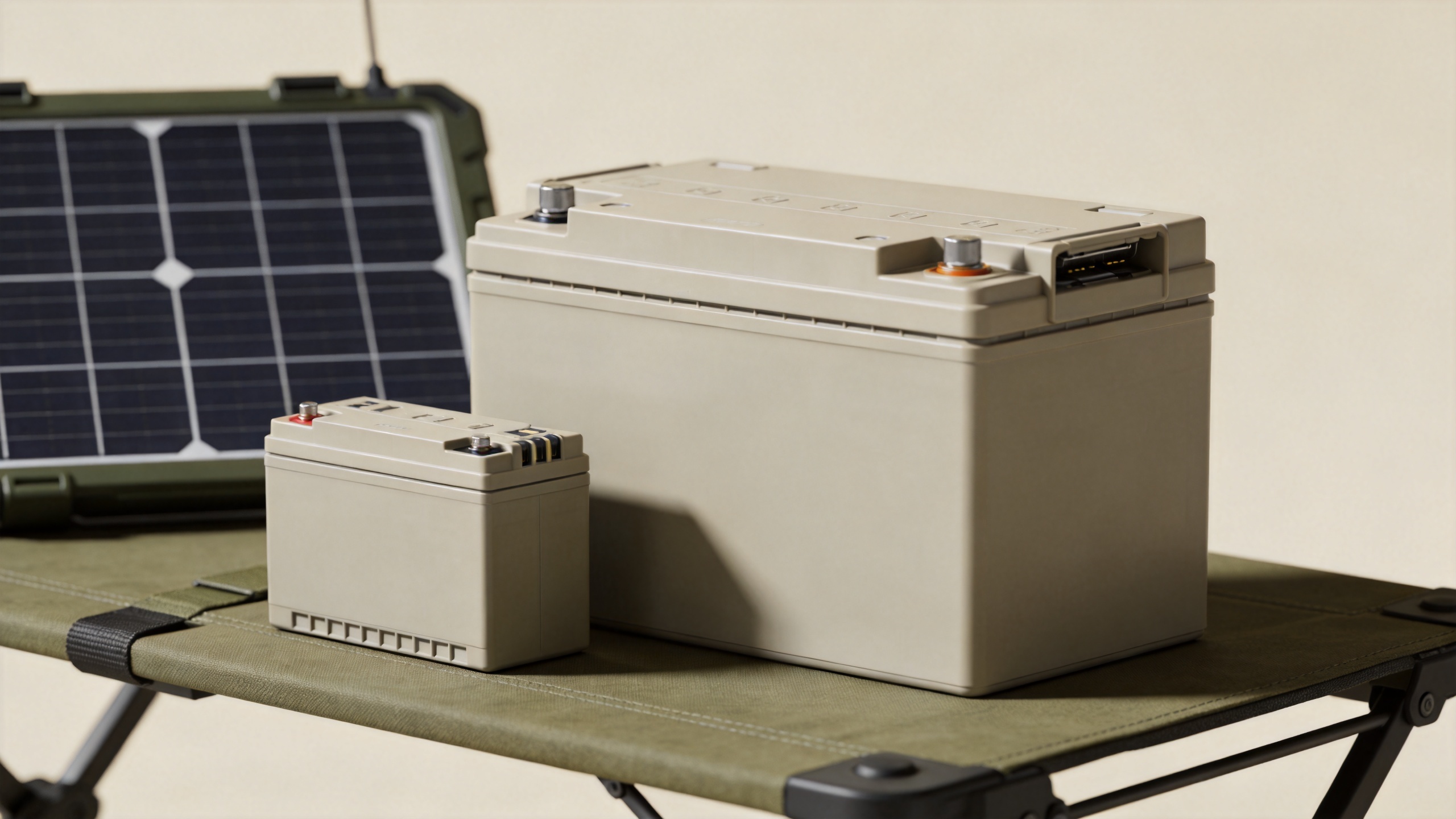
Many buyers ask for a modular portable power station LiFePO4 battery configuration. LiFePO4 chemistry is frequently discussed for thermal stability and cycle-life potential, but procurement should treat those as configuration-dependent characteristics rather than universal promises. The cell format, battery-management system, depth-of-discharge settings, charging profile, ambient conditions, and service policy all affect field results.
A technical review should request the battery specification, the compatible expansion-battery list, operating and storage limits, and the conditions under which capacity and cycle-life figures were measured. It should also clarify whether the base unit can manage different module ages or states of charge, and what procedure applies when a module needs replacement. Those questions help keep a modular arrangement serviceable over time.
OEM requirements: define the commercial scope early
An OEM modular portable power station project needs more than a target watt-hour range. The purchase scope should identify which elements are open to customization: housing finish, brand marks, plug types, control-panel language, carton artwork, accessory bundle, documentation, and the battery-module configuration. If a requested change affects electrical behavior, transport classification, or testing, ask the supplier to explain the validation path before finalizing the specification.
Useful OEM review questions include:
- Which base unit and expansion modules are electrically compatible?
- Which output ports, input ports, and regional plug options are available for the intended market?
- What information is supplied for battery safety, shipment handling, and product traceability?
- How are firmware updates, fault codes, spare modules, and warranty cases handled?
- Which requested branding changes are cosmetic, and which require further engineering validation?
For portable lithium systems, transport documentation deserves its own discussion. UN 38.3 concerns lithium-cell and battery transport testing, while battery-safety documentation may involve standards such as IEC 62133-2 when applicable. Neither reference should be treated as a blanket certification claim. Ask for documents that apply to the actual configuration, battery type, and destination market.
Wholesale planning: keep the assortment understandable
A wholesale modular portable power station assortment works more smoothly when the relationship between the base unit and each expansion option is easy to explain. Build the range around a small number of clear use cases, such as light mobile electronics, longer field shifts, or backup for selected essential loads. Then make compatibility, charging choices, and what is included in each package visible in the sales materials.
For a modular portable power station manufacturer, consistent documentation can reduce avoidable inquiry friction. A distributor should be able to tell whether an expansion battery is optional, whether it ships separately, what cables are included, and whether the expected output changes with the configuration. The same materials should avoid treating runtime as a fixed promise, because runtime changes with connected loads, conversion losses, temperature, and battery condition.
A practical evaluation sequence
| Decision step | What to confirm | Why it matters |
|---|---|---|
| Use case | Priority loads, operating hours, and location | Sets the starting energy and output requirement. |
| Architecture | Base-unit limits and supported battery modules | Shows whether expansion is practical for the planned fleet. |
| Battery system | LiFePO4 details, BMS behavior, and replacement process | Links the battery choice to service and lifecycle planning. |
| Charging | Input options, site charging window, and solar conditions | Tests whether energy can be restored between uses. |
| Commercial delivery | OEM scope, labeling, documents, packaging, and support | Prepares the program for distribution and destination-market review. |
Move from a feature list to a defensible brief
Power on the go becomes simpler when a portable system is specified around the job it must do. A modular portable power station may offer a sensible path for buyers who need to start with a defined load profile and retain an option to expand. The responsible next step is to prepare a concise brief: priority loads, runtime target, output and charging needs, deployment conditions, destination market, and required OEM or wholesale scope.
Shenzhen Golden Future Energy Ltd. works in solar home energy storage, off-grid power, and LiFePO4 battery applications. For a configuration discussion, provide the load list and existing equipment details first; that gives a supplier a clearer basis for assessing a modular portable power station without assuming compatibility or a universal configuration.
 Hot News