EN

Commercial and industrial energy storage: Scaling Storage for Business
For a B2B buyer assessing commercial and industrial energy storage, the useful comparison is not a headline claim. It is the documented scope of supply, service expectations, and fit for the project. A warehouse, light-manufacturing line, cold-room facility, or multi-tenant building may all use stored energy differently. Before capacity is discussed, clarify the operating objective: managing a short demand peak, supporting defined critical loads during an outage, absorbing on-site solar, or coordinating several of these tasks.
Commercial and industrial energy storage is therefore a system-planning exercise rather than a battery-only purchase. A sound brief connects interval-load data, tariff structure, operating hours, electrical infrastructure, site constraints, and the control workflow. That approach gives a procurement team a clearer basis for comparing quotes without assuming that one configuration suits every site.
Start with the business event the system must handle
“Reduce energy cost” is a broad goal. More precisely, the first question is when the facility experiences a problem and what the system is expected to do in that interval. A site may have short, high-power peaks created by equipment start-up; another may need a measured amount of energy for selected loads during a grid interruption. A solar-equipped facility may instead want to move part of its own generation to a later operating period.
For commercial and industrial energy storage, turn each objective into an observable operating event. Record the target load, its duration, its timing, whether the event repeats, and what must remain powered. This separates power requirements from usable-energy requirements. It also helps the project team distinguish a resilience objective from a self-consumption or demand-management objective before suppliers begin proposing equipment.
- Peak-management objective: identify the relevant load interval, peak duration, and allowable reduction.
- Backup objective: list priority loads, their starting currents, the desired support period, and the transfer arrangement.
- Solar-use objective: compare generation timing with consumption timing and define the intended charging and dispatch rules.
- Operational flexibility objective: define who sets schedules, reviews alarms, and approves changes to control logic.
Build a load picture before selecting power and capacity
A representative business site may have a steady daytime base load, several brief equipment peaks, and a smaller group of essential circuits. These are not interchangeable. The load profile should show interval data for a representative period, known seasonal changes, major motors or compressors, planned production changes, and any generator or solar interfaces. A load-list review gives buyers a clearer basis for discussing backup needs and avoids sizing solely from an average bill value.
Ask a practical question early: what information would an installer or supplier need before they can assess this configuration? At a minimum, prepare recent interval data where available, a single-line diagram, transformer and service details, priority-load information, available installation area, ambient conditions, and the location of other electrical equipment. If expansion is likely, document the expected load and solar changes rather than assuming the initial system will automatically accommodate them.
Evaluate commercial and industrial energy storage as an integrated system
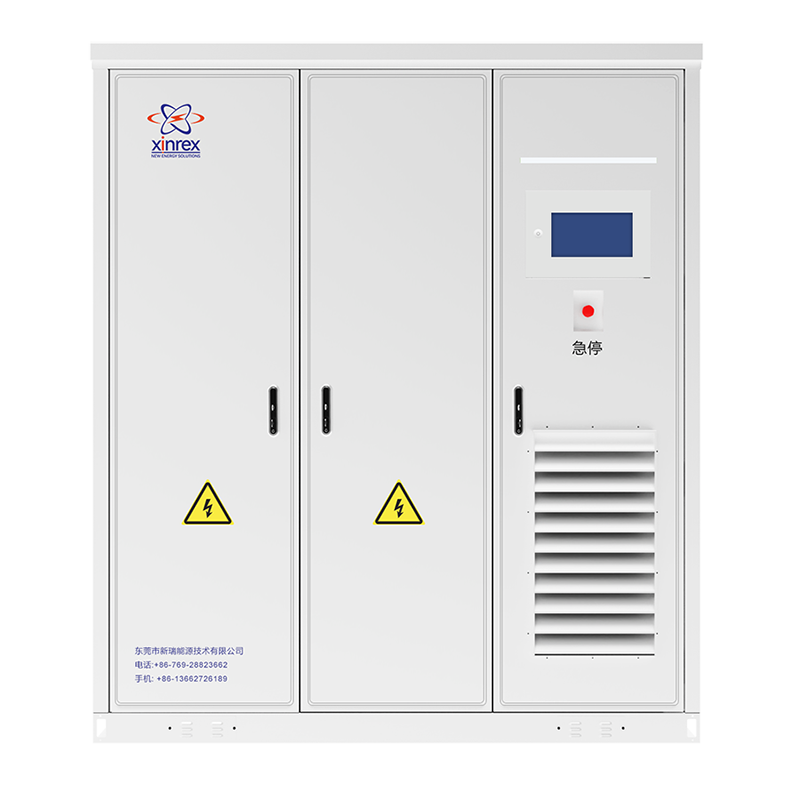
A commercial and industrial energy storage project commonly brings together battery modules or packs, a battery management system (BMS), a power conversion system (PCS), an energy management system (EMS), protection equipment, and site-specific electrical interfaces. The U.S. Department of Energy describes battery energy storage as an integrated system that can include packs, BMS, EMS, PCS, transformers, and inverters. The exact arrangement depends on the project, but the procurement review should account for the interfaces rather than treating capacity as the entire specification.
The BMS monitors battery conditions and supports protective control at the battery level. The PCS manages AC/DC conversion and influences how the system exchanges power with the site. The EMS provides the dispatch logic: for example, it may follow a schedule, respond to a metered threshold, or coordinate with solar generation. A commercial and industrial energy storage LiFePO4 battery can be one part of this architecture, but its suitability still depends on voltage design, thermal environment, control settings, enclosure design, and the intended duty cycle.
| Review area | Questions for the project brief | Why it matters |
|---|---|---|
| Power and energy | What kW is required, for how long, and at what operating window? | Prevents a capacity-only comparison. |
| Controls | Which meter signals, schedules, limits, and user roles govern dispatch? | Connects equipment to the operating objective. |
| Electrical integration | Where does the system connect, and what protection or transformer work is in scope? | Clarifies site interfaces and installation responsibility. |
| Service | What monitoring, commissioning, training, and fault-response scope is documented? | Allows like-for-like quote comparison. |
Make safety and siting part of the specification
Safety review should begin at the concept stage, not after a cabinet is selected. The installation location, clearances, access, ventilation or thermal-management approach, emergency planning, local code requirements, and authority-having-jurisdiction process may affect the feasible system scope. In the United States, NFPA 855 addresses stationary energy-storage installations, while UL 9540A is a test method used to evaluate thermal-runaway fire propagation behavior. These references do not substitute for a site-specific design review; their relevance depends on the jurisdiction and documented system configuration.
For a commercial and industrial energy storage manufacturer discussion, request the documentation that applies to the proposed configuration, not a generic list of acronyms. Confirm which equipment boundary is covered, what site assumptions were used, which responsibilities remain with the integrator or installer, and what information is needed for local review. That is especially important when the design includes indoor placement, constrained access, or nearby occupied areas.
Compare OEM and wholesale offers by scope, not labels
OEM commercial and industrial energy storage sourcing can involve enclosure design, control preferences, branding, communication interfaces, and documentation responsibilities. Wholesale commercial and industrial energy storage procurement may prioritize repeatable configurations, lead-time planning, spares, packaging, and channel support. Both routes require the buyer to define where the supplied equipment ends and where project integration begins.
Use a quote matrix that identifies included hardware, PCS and EMS scope, monitoring access, commissioning boundaries, training, warranty terms, response process, and exclusions. For a meaningful cost comparison, separate equipment scope from electrical works, civil work, permitting support, shipping, commissioning, and service. This does not predict project savings or payback; it makes the commercial assumptions visible so the team can evaluate them against its own tariff and operating data.
A practical procurement checklist
- Write the primary operating objective and rank it against secondary objectives.
- Provide representative interval-load data and a list of priority loads.
- Document existing solar, generators, service capacity, and connection constraints.
- Define the expected power, usable-energy window, dispatch logic, and expansion assumptions.
- Identify installation location, access, thermal conditions, and local approval requirements.
- Request configuration-specific safety, control, commissioning, and service documentation.
- Compare OEM or wholesale offers with a single scope matrix before evaluating commercial terms.
Scale with a validated project brief
Commercial and industrial energy storage can support different business workflows, but the dependable starting point is the same: define the load event, document the site, and make the system boundary explicit. It is tempting to ask for one ideal size; more precisely, a useful configuration depends on loads, installation conditions, battery compatibility, controls, and the intended energy-management workflow.
Shenzhen Golden Future Energy Ltd. works in renewable-energy and energy-storage system discussions, including commercial and industrial applications. A project inquiry is more productive when it includes the load profile, required operating scenario, site details, and the desired supply and service scope. Those inputs allow a supplier or installer to assess whether the proposed commercial and industrial energy storage configuration fits the project rather than relying on a generic capacity recommendation.


 Hot News